Zuka
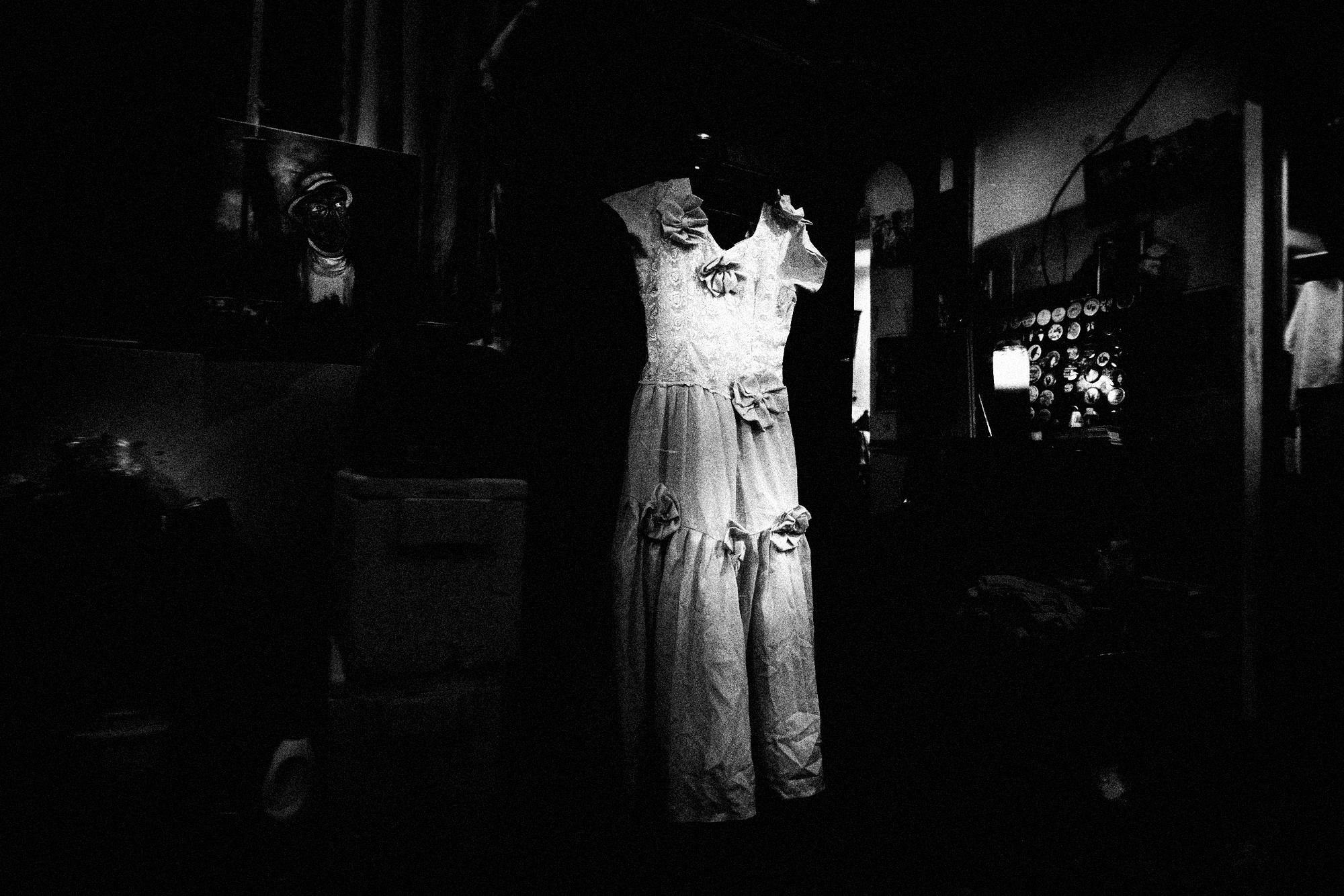
Blanca's house · La Guajira, 2021
- Year
- 2021
- Medium
- Documentary photography · black-and-white finish, 35mm grain
- Place
- La Guajira, Colombia
- Source
- Testimony of Blanca Díaz, Wayuu woman from the Con Zepa community
Nine photographs taken in the house of Blanca Díaz, in La Guajira. Her husband Juancho was murdered by paramilitaries in 2000. Her daughter Zuka — fifteen, selling empanadas to save money for the anniversary of her father's death — was kidnapped, raped and murdered by men working for Jorge 40 and Hernán Giraldo, in December, sixteen days before that anniversary.
The house operates as three parts of one body: the altar (the photograph on the wall, the table of memories, the cloth where Zuka wrote in her own hand «I am Zuka, I am turning fifteen»), the mother (who holds the photograph, who covers herself with the blanket) and the absence (the room, the dress never worn). Finished in black-and-white with 35mm film grain to unify tone and keep the materiality of grief at the surface.
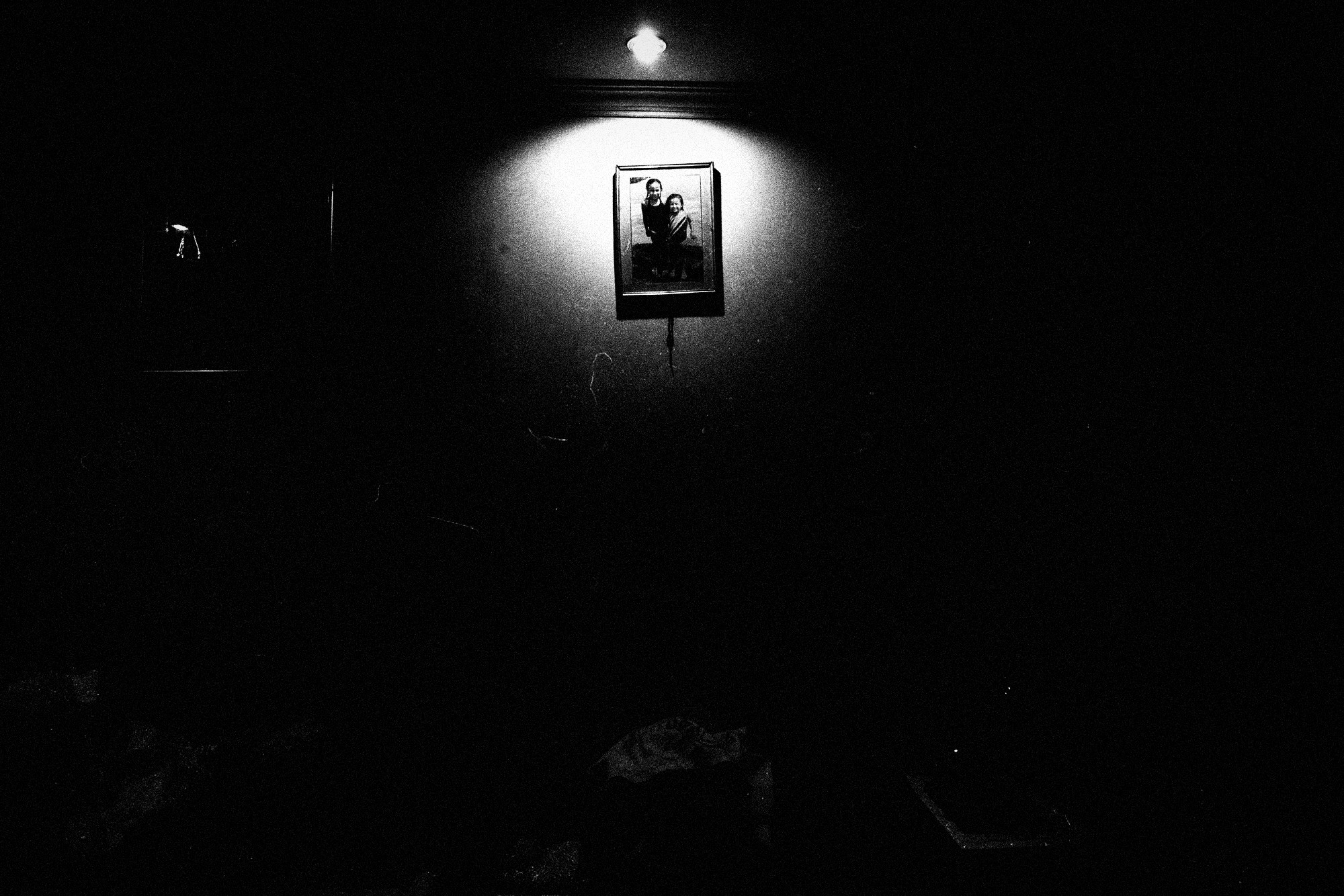


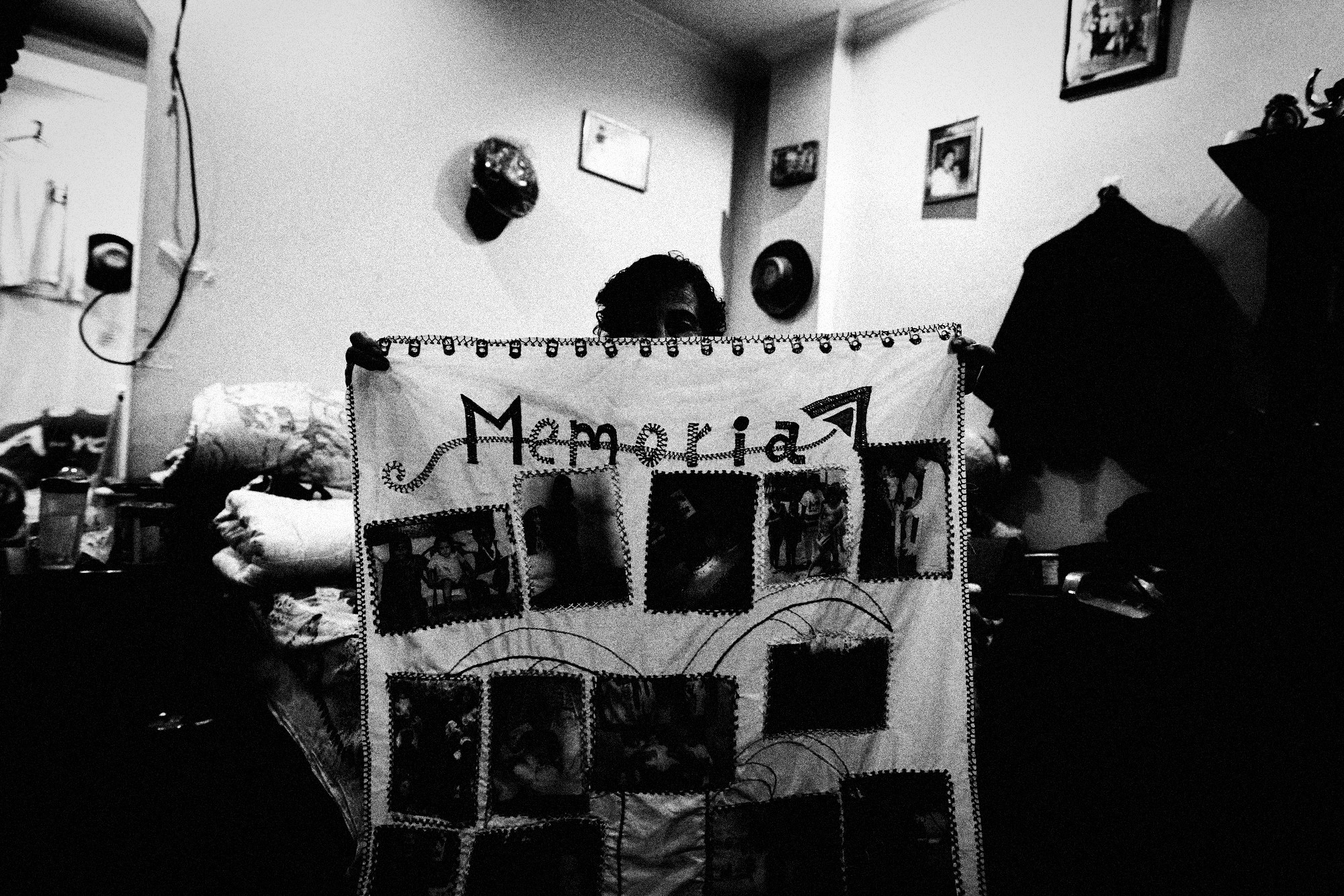
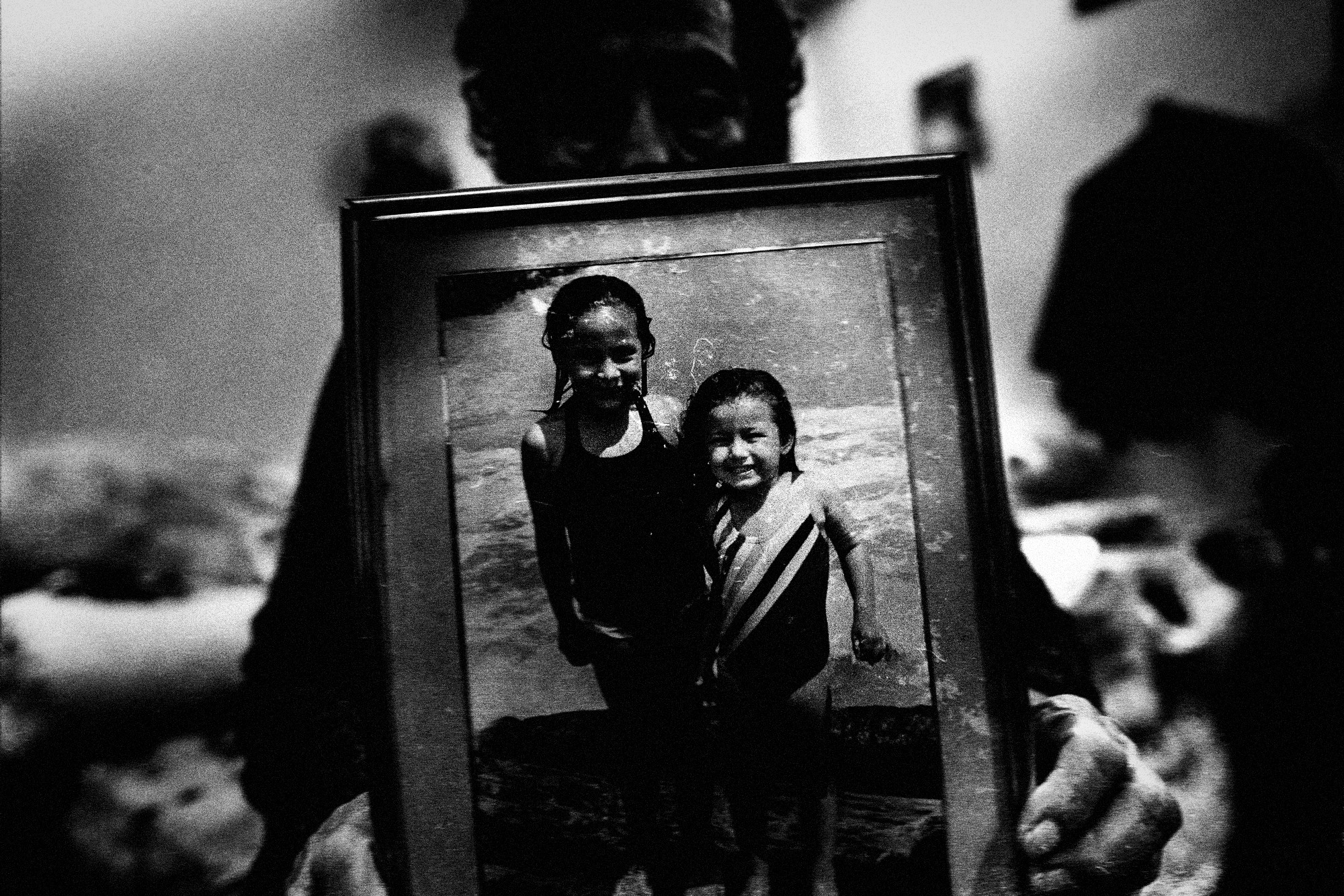


"Beyond her innate joy, she lived in great pain because they had killed her father."
— Blanca Díaz, on her daughter Zuka
My husband was «vachi», which means a wise man. He had great knowledge of healing plants; he cured people from all over Colombia and the world. His fame and powers stirred envy in many. One by one his brothers were murdered without mercy, until it was Rubén Antonio's turn — Juancho, as we called him.
In that time the zones were fought over by Hernán Giraldo and Jorge 40. The girls who wore short blouses had car acid thrown on their bellies. We were talking about fourteen-year-old girls who, according to the paramilitaries, did not follow the moral norms of the homeland.
My godfather says that she shouted "mommy help me", "mommy defend me", "don't kill me". The place where they killed and raped her was the well. In the medical examiner's photos they left her dead in the lagoon. The other girls remained disappeared. Only one survived, but she went completely mad.
No one recognized my daughter, so before we arrived she was buried in Cuestecitas. Four months later we managed to get them to tell us where she was buried. We took her out, put her in a coffin, and buried her in the cemetery next to her father. Years later they threatened us and demanded we remove my daughter's coffin from the cemetery because she was indigenous. I wrapped her in a white chinchorro.
My daughter was called Zuca after a famous actress in a Brazilian soap opera called "The Mestiza". In the soap they speak about disputes over land between two families, a theme so present in Colombia.
— Testimony of Blanca Díaz, 2021. Material preserved by the artist under express authorization for this work.
The work does not reconstruct the scene of violence. It does not document the wound. It does the opposite: it enters the house where mourning has become daily, and lets the objects speak — the photograph still hanging, the dress never worn, the mother's hands.
Blanca Díaz authorized the use of her voice and image for this work. Authorship of the testimony belongs to her. Visual authorship belongs to the artist. No restitution is possible. What the work does is refuse to let the silence close.